Why Children Repeat the Same Joke Long After Adults Stop Finding It Funny
- July 10, 2026
- 0
A child discovers a joke that gets a big laugh at breakfast. The same joke appears again in the car, after school, during dinner, and just before bed.




A child discovers a joke that gets a big laugh at breakfast. The same joke appears again in the car, after school, during dinner, and just before bed.

A child discovers a joke that gets a big laugh at breakfast. The same joke appears again in the car, after school, during dinner, and just before bed. By the next day, the child has added a louder voice, a longer pause, and several dramatic movements. The adults are no longer surprised, but the child still seems delighted.
Repeated jokes can test adult patience, especially when the humor interrupts conversations or appears at the wrong time. Yet repetition is often doing more than producing laughter. Children may be practicing language, studying reactions, testing social influence, or trying to recreate a moment when they felt especially connected.
Understanding why children repeat the same joke can help parents guide humor without making a child feel that being playful is a problem.
Children spend much of daily life responding to adult directions. They are told when to leave, where to sit, what to finish, and which behavior needs to stop. A joke briefly changes that balance. The child says something, and other people react.
That reaction can feel powerful. The child caused the room to change. A tired parent smiled. A sibling laughed loudly. Everyone looked in the child’s direction for a positive reason.
Repeating the joke is often an attempt to create that successful moment again. The child may not understand that surprise was part of what made the first version funny. The more important lesson may simply be, “When I say this, people enjoy me.”
Adults usually understand that a joke changes when the audience has already heard it. Children may recognize the words and the reaction but miss the role of timing, surprise, and context.
A joke that worked during relaxed play may not work while a parent is giving directions. A funny sound that delighted a sibling once may become irritating after ten repetitions. These differences seem obvious to adults because they have years of social experience.
Children build this awareness gradually. Repetition allows them to test whether the same material works with different people, in different places, and at different moments.
Jokes often involve rhythm, double meanings, unusual words, facial expressions, and careful pauses. Children may repeat them because the structure itself is satisfying.
A child who has recently learned a riddle may enjoy remembering the setup, waiting before the answer, and delivering the final line correctly. Another child may repeat a funny phrase because the sounds feel enjoyable to say.
This can look like needless repetition from the outside, but the child may be practicing memory, pronunciation, storytelling, and conversational timing all at once.
Making people laugh is socially risky. A new joke might fail. The audience might not understand it, or someone may respond with silence. A joke that worked before feels much safer.
Children who are cautious in social situations may rely heavily on familiar material. Repeating a known joke allows them to join a conversation without inventing something new under pressure.
The behavior may become especially noticeable around relatives, new friends, or groups where the child wants attention but does not know how to enter naturally.
Humor can be an invitation. A child may tell a familiar joke after a parent has been busy, after a disagreement, or when the room feels quiet. The joke may be less about comedy and more about asking, “Are we okay?”
Children do not always request connection directly. Instead, they bring back something that once created warmth. If the joke produced a happy family moment before, repeating it may feel like pressing a familiar button that restores closeness.
This does not mean parents must laugh every time. It does mean the child’s repeated attempt may carry an emotional message worth noticing.
When the original response fades, some children increase the performance. They repeat the punchline, use a stronger voice, move closer, or add dramatic actions. Adults may see this as deliberate annoyance.
From the child’s point of view, the joke may seem to have stopped working for unclear reasons. The child may believe the delivery needs more energy rather than realizing the audience has simply heard it too many times.
This is similar to pressing a button harder when a toy does not respond. The child repeats the action with greater intensity because the original connection between action and result has become unreliable.
Siblings often create a private humor system that adults do not fully understand. A phrase, sound, or mistake can become funny because it belongs to a shared memory. The joke may continue for weeks because each repetition strengthens the feeling that the children share something special.
These inside jokes can support closeness, but they can also become exclusionary or disruptive. One sibling may enjoy the repetition while another becomes tired of being the subject of it.
Parents can allow shared humor while setting limits when the joke embarrasses, targets, or repeatedly irritates another person.
Most children seek attention because attention is a basic relationship need. Humor is often one of the most successful ways to get it. If a child receives little positive attention during ordinary behavior but gets a strong response from joking, the child may use humor more intensely.
Even irritated attention can keep the pattern going. Repeated commands such as “Stop saying that” or “That is not funny anymore” still place the child at the center of the interaction.
Families may notice improvement when children receive more positive attention during calmer moments, such as helping with a task, sharing an idea, or showing interest in someone else.
Adults do not need to perform excitement every time. Forced laughter can confuse the child and encourage further repetition. A calm, honest response is usually clearer.
A parent might say, “That one was very funny the first time. I have heard it several times now, so it does not surprise me anymore.” This teaches an important part of humor without insulting the child.
Another option is to recognize the intention: “You are trying hard to make me laugh.” That statement notices the child’s social goal even when the joke itself no longer works.
Some children benefit from a simple family rule about repetition. A joke might be told once or twice, then saved for another audience or another day. The limit should be easy to understand and applied without anger.
Parents can also offer a new challenge: change the ending, invent a different character, draw the joke, or find a new riddle. This redirects the child from repetition toward creativity.
The goal is not to control every playful moment. It is to help children understand that successful humor includes noticing how other people are responding.
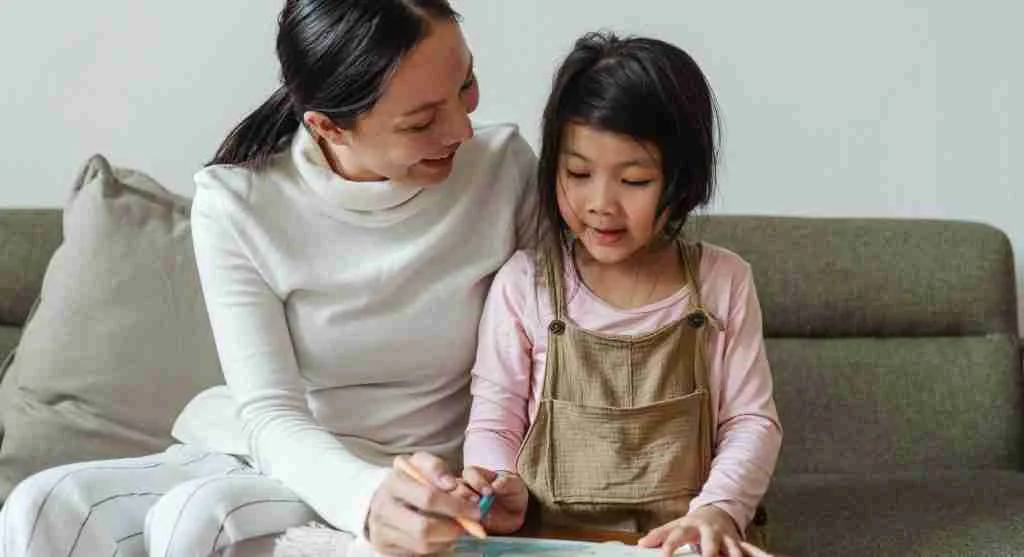
Children need practice noticing whether an audience is engaged. Parents can point out simple signals: people are smiling, asking for more, turning away, trying to speak, or appearing uncomfortable.
This teaching should stay neutral. Statements such as “You are being annoying” can make children feel that their personality is the problem. A more useful message is, “Your brother is asking you to stop, so the joke needs to end now.”
This separates the child’s identity from the social boundary. The child can still be funny while learning that humor must respect the audience.
Children sometimes repeat jokes about someone’s mistake, appearance, fear, voice, or embarrassing moment. The child may argue that everyone laughed before, but earlier laughter does not make the joke harmless.
A clear boundary is appropriate when humor depends on another person’s discomfort. Parents can explain that a joke stops being shared fun when one person is expected to feel bad so everyone else can laugh.
The child may need help finding a form of humor that does not target a family member or classmate. Silly wordplay, imaginary characters, riddles, and funny observations can offer safer alternatives.
Some children use humor to avoid serious feelings. A child may joke when embarrassed, worried, corrected, or unsure what to say. The laughter can make the moment look light even when the child feels uncomfortable underneath.
Parents can notice whether repetitive humor appears most often during difficult conversations, transitions, or situations that require vulnerability. If it does, the child may need help naming the feeling before returning to the topic.
A calm response might be, “You are making jokes right now, and I wonder whether this conversation feels uncomfortable.” The parent can acknowledge the humor without allowing it to erase the issue completely.
Over time, children usually become better at adjusting jokes to the audience. They learn that what makes a younger sibling laugh may not work with classmates. They notice that some jokes belong in playful settings but not during lessons, meals, or serious conversations.
This growth comes through practice, feedback, and observation. Children need chances to be funny, but they also need gentle guidance when repetition, timing, or content causes problems.
A child who repeats the same joke today may eventually become a thoughtful storyteller who understands exactly when to pause, when to change direction, and when to let the joke end.
Q: Why does my child keep repeating the same joke?
A: Children may repeat jokes to recreate a successful reaction, practice language, gain attention, test timing, or reconnect with other people.
Q: Should parents keep laughing at a repeated joke?
A: No. Parents can respond warmly without pretending the joke is still surprising and can explain that humor changes after an audience has heard it several times.
Q: How can parents stop repetitive joking without hurting confidence?
A: Set a neutral repetition limit, acknowledge the child’s intention, and redirect the child toward a new joke, story, drawing, or playful idea.
Q: What should parents do when a joke hurts a sibling?
A: End the joke clearly and explain that humor is not shared fun when one person feels embarrassed, targeted, or repeatedly asked to tolerate it.
Q: Can excessive joking be a sign of nervousness?
A: Yes. Some children use humor when they feel embarrassed, anxious, corrected, or unsure how to handle a serious moment.
Children often repeat the same joke because humor gives them connection, attention, language practice, and a sense of influence. Parents can support a child’s playful side while teaching that good humor also requires timing, variety, and respect for the audience. Calm limits and creative redirection help children become more socially aware without making them feel ashamed of trying to be funny.