10 Outdoor Family Activities That Support Healthy Child Development
- April 6, 2026
- 0
Being outside with your family is a lovely way to help your kids grow. Outside, children generally have space to be active, wonder about things, figure things out




Being outside with your family is a lovely way to help your kids grow. Outside, children generally have space to be active, wonder about things, figure things out
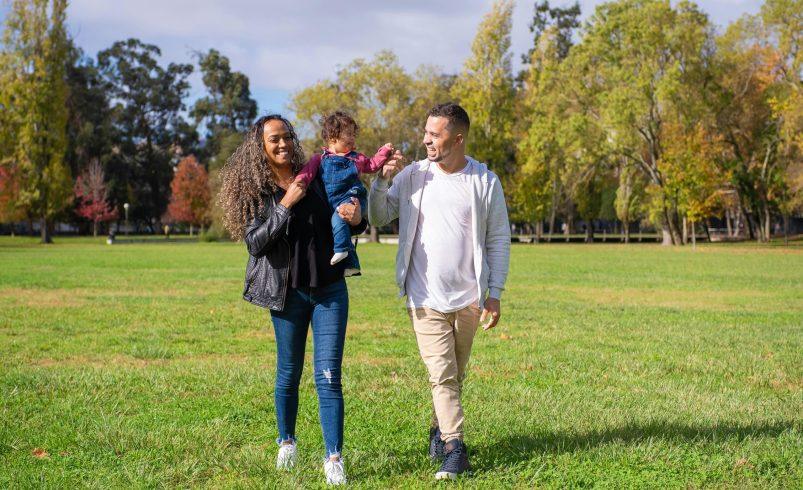
Being outside with your family is a lovely way to help your kids grow. Outside, children generally have space to be active, wonder about things, figure things out and get to know their family. Plus, being outdoors makes it easy for families to start easy habits that don’t require a lot of money or complicated arranging.
Experts in children’s health and development frequently say that playing outside is about a lot more than just being fit. It can improve concentration, self-belief, how you talk to others, and managing feelings. You don’t require brilliant sunshine or enormous trips for your kids to get these advantages; just spending time together as a family outdoors, in a normal way, really does help.
Kids are usually much more able to roam and do as they please outside. They can run around, climb things, look at what’s going on and really use their senses to move and learn. All this changing of activity is good for becoming coordinated, concentrating and being able to think in different ways.
And when it comes to how kids and their families get along, child development experts will tell you being outside together is a big help. A stroll, a game or even something like doing a chore in the garden easily leads to a bit of a chat and working as a team, without it needing to be a proper, set conversation.
When kids are encouraged to really see things, even a quick stroll is a lot more fun. Families could tally up how many birds they see, search for particular shades, or say what noises they can identify. These games of noticing strengthen language skills, how long they can concentrate, and their memory, and they don’t make the outing too complicated.
In fact, the people who know the most about how young children learn frequently suggest doing things where being active and talking go together. A walk where you’re doing something easy as you go helps children to pay attention and to speak to each other, while also working on their ability to focus.
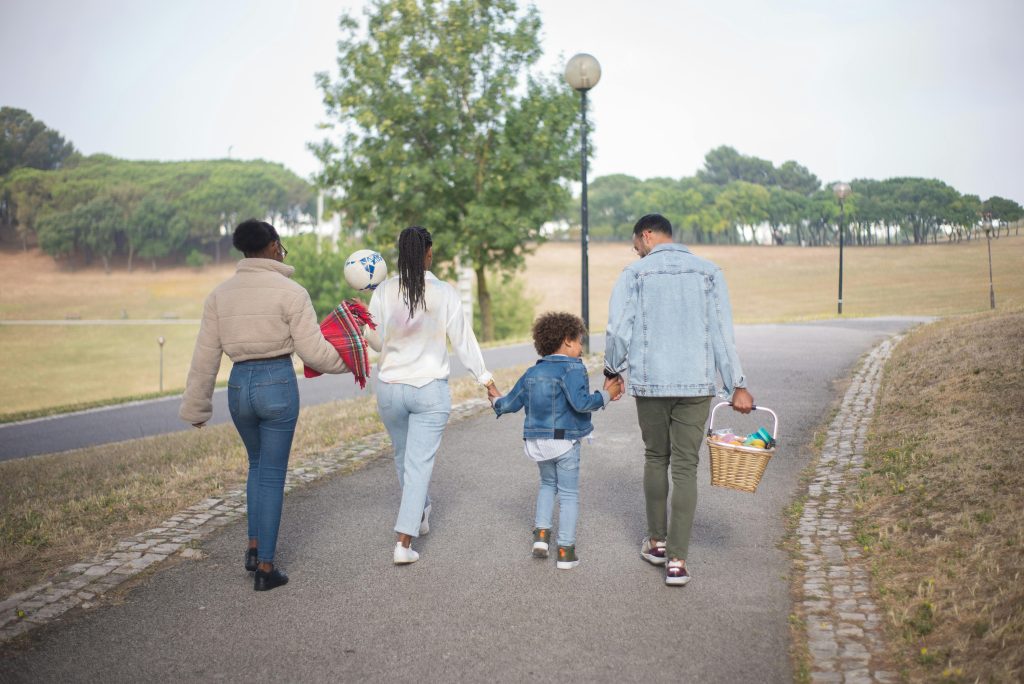
A scavenger hunt doesn’t have to be complicated. Looking for a leaf, a smooth stone, a blossom, a round object any of those will do. And doing something like this outside helps kids with figuring things out, looking carefully at what’s around, and being curious. It also gets them to relax and really see where they are.
People who are experts in fun family activities frequently say that activities without a specific right answer are good when you have kids of different ages. The older ones can be in charge of the hunt, and the little ones can look for things and get help if they need it.
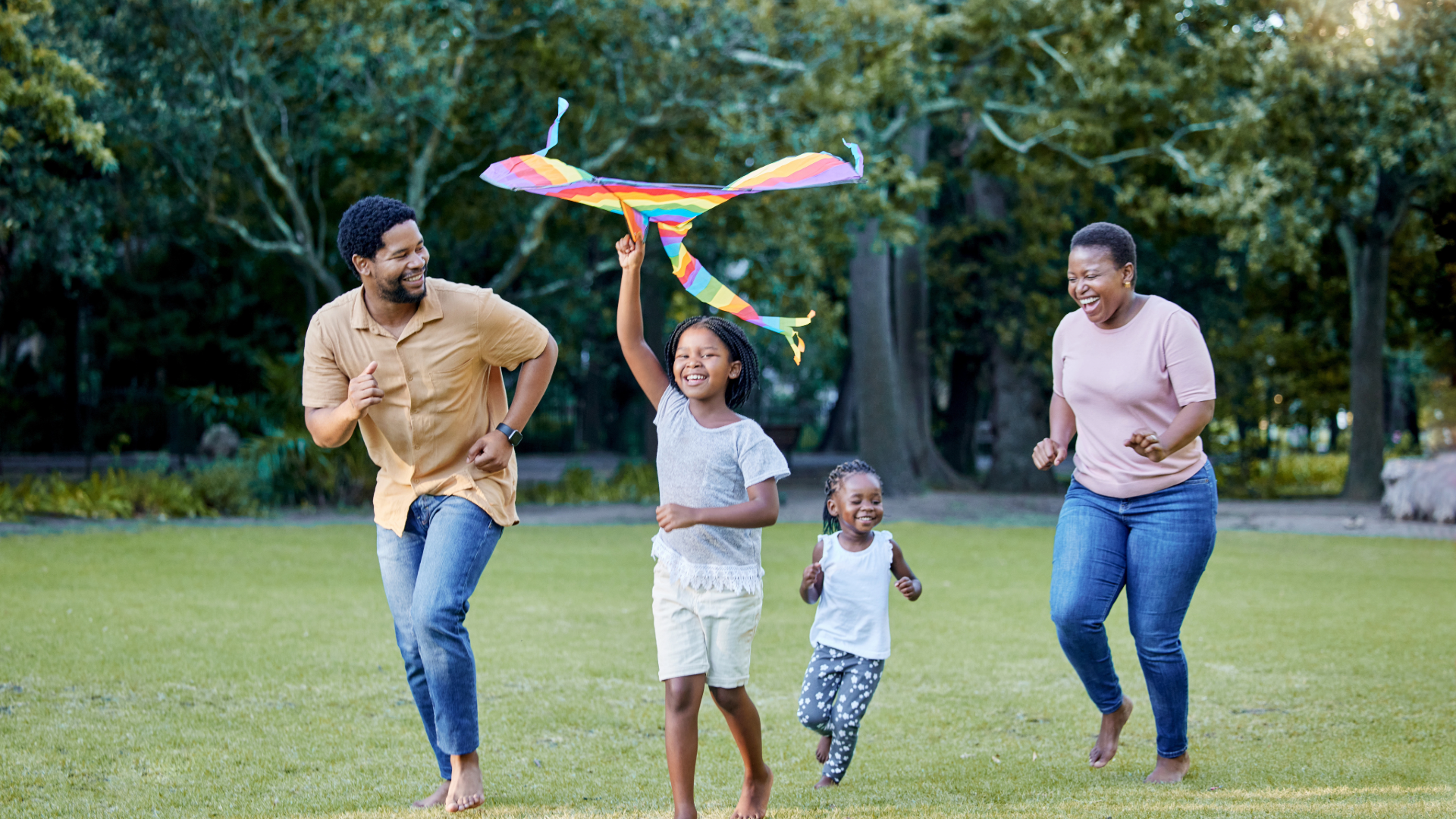
Credit: Kampus Production / Pexels
At playgrounds, kids get to work on keeping their balance, getting up things, sharing with each other, and figuring out how dangerous something is. And all of that actually helps them grow in both body and in how they get along with people. They find out what they’re physically capable of, at the same time as they are observing the movements and games of other children.
Child wellness experts say that being challenged in a safe situation with an adult around is good for building a child’s self-assurance. So, when a kid attempts a different ladder or a slide, they learn more than just the actual doing of it. They’re also getting practice with being brave and with getting over that moment of thinking ‘I don’t know’ or being unsure.
Gardening, even with just a few easy jobs, helps kids learn to be patient, to be in charge of something, and to really look at things. Things like giving plants water, turning over the dirt, and noticing how they grow all help kids grow up, because they do them regularly and use their senses.
In fact, people who advise families on how to live their lives often suggest gardening. That’s because it gets kids moving, and you can see what happens. They realize that if you look after something for a while, it will be different, and this helps them understand how things happen because of other things.
When kids throw, kick or roll a ball, they’re getting better at coordinating their bodies, judging when to do things, and being with other people. Ball games are pretty flexible, you can change them to suit all sorts of ages and how much energy everyone has, and because of that a lot of families find them a good thing to do. People who study movement say that uncomplicated games are effective because they don’t create a lot of stress, yet still help kids develop abilities. Importantly, kids can be involved without having to have actual coaching in a sport.
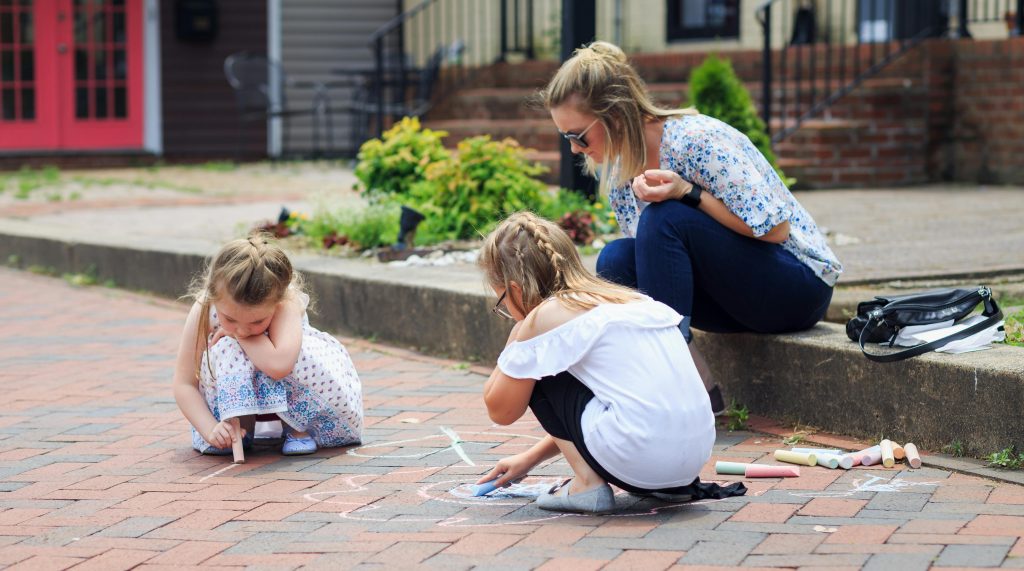
A driveway or path becomes a really adaptable place to learn with just some sidewalk chalk. Families can draw shapes, write out basic words, design a hopscotch grid, or even build roads for little toy cars. Doing this boosts their imagination, the small muscle movements in their hands, and how they talk to each other.
Those who work in early childhood education generally like activities which combine being active with expressing yourself. Chalk play is something that gets kids moving, is a social experience, and you can change it quickly to match whatever a child is into at that moment.
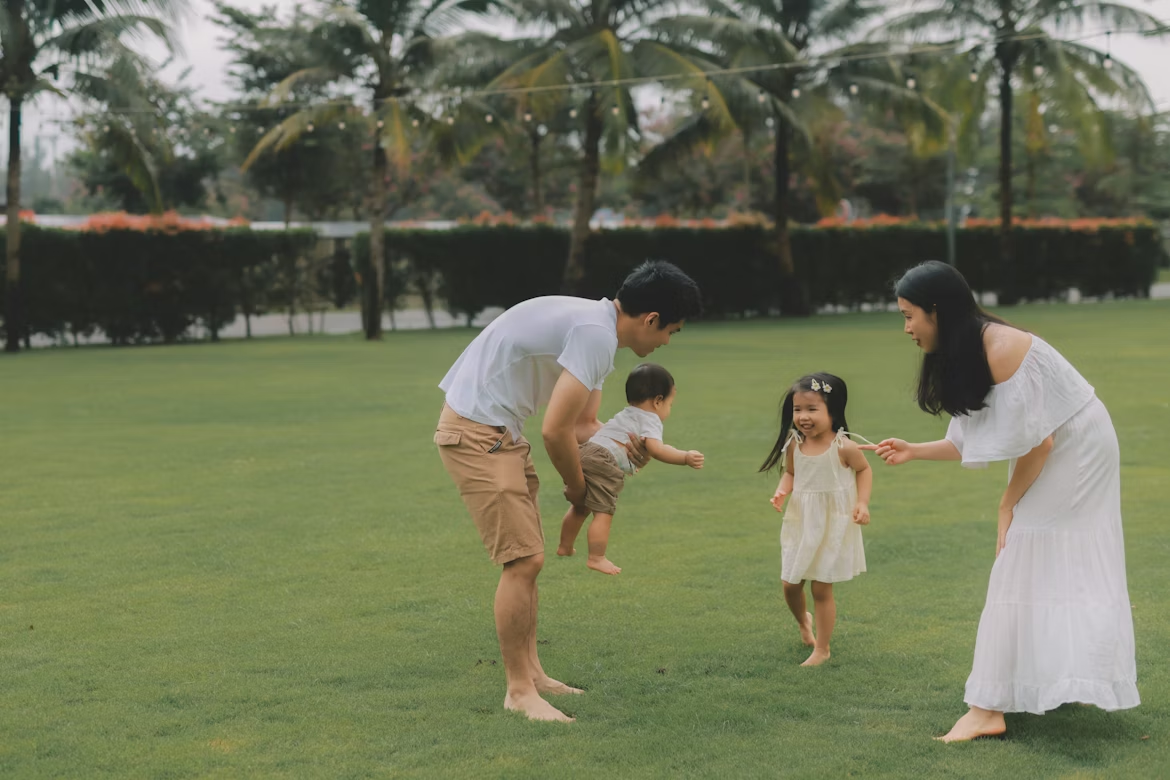
Credit: Michael Morse/ Pexels
When you eat outside, even a quick trip out feels more special. It also gives everyone a peaceful chance to talk with each other during all the running around. Kids tend to open up more and say what’s on their minds when they’re in a chill, slow-paced environment.
People who study how families talk say that eating together encourages conversation, and even just chatting, and a snack at the park can do the same thing for a little while.
It’s pretty normal to feel annoyed when you’re first figuring out how to ride, keep your balance, or control where you’re going. And actually, this difficulty is a big reason why it’s so good for kids as they grow. Improving at these things helps them with sticking at something, understanding their body, and believing in themselves.
People who are experts in how bodies move usually suggest slowly increasing how tricky things are, rather than pushing a kid too hard. When a child doesn’t give up after rocking from side to side, they’re developing something more than just a physical ability.
If you all go for a tidy-up walk around the yard, on the driveway or in any outdoor space you share, it can get everyone into the regular habit of helping. Kids can pick up sticks that have dropped, get together their toys, and sort out a little patch of the garden. This shows them they’re helping and that everyone looks after the area.
Experts in family routines say that children learn to be responsible best by doing things all the time, not from being told at length what to do. These easy jobs outside make children feel as though they’re a part of what the family does.
You don’t have to be doing lots of stuff to have fun with your family outside. Just being on a blanket and looking at clouds, hearing birds, or feeling the wind in the trees will help kids relax. And when they relax, it’s easier for them to focus, use their senses and deal with their feelings.
People who work with kids and their health say that a peaceful time outside is often really good after a hectic day at school or a very exciting weekend. It lets children get back in touch with nature and their families in a gentler way.
Q: Why are outdoor family activities good for children?
A: Outdoor family activities support child development by encouraging movement, observation, communication, and problem-solving in a natural setting.
Q: Do outdoor family activities need to be long to help?
A: No, even short outdoor play sessions can support focus, mood, and connection when they happen regularly.
Q: What outdoor family activities work for different ages?
A: Walks, scavenger hunts, chalk play, gardening, and ball games are flexible outdoor family activities that can often be adjusted for mixed age groups.
Q: Can outdoor play support emotional regulation?
A: Yes, many child development professionals note that outdoor play and quiet time outside can help children release energy and settle emotionally.
When families are active outside together, it really helps kids grow, because it gets them moving, encourages them to wonder about things, lets them talk with each other and gives everyone time together. You don’t have to arrange anything elaborate to get these advantages. Simple things like walks, using chalk, gardening, scavenger hunts and even just sitting and looking at what’s around you can all contribute to a family being healthier. Spending time outdoors as a family fairly often frequently helps children develop, and it’s lovely how much more easily and smoothly you then connect with one another.