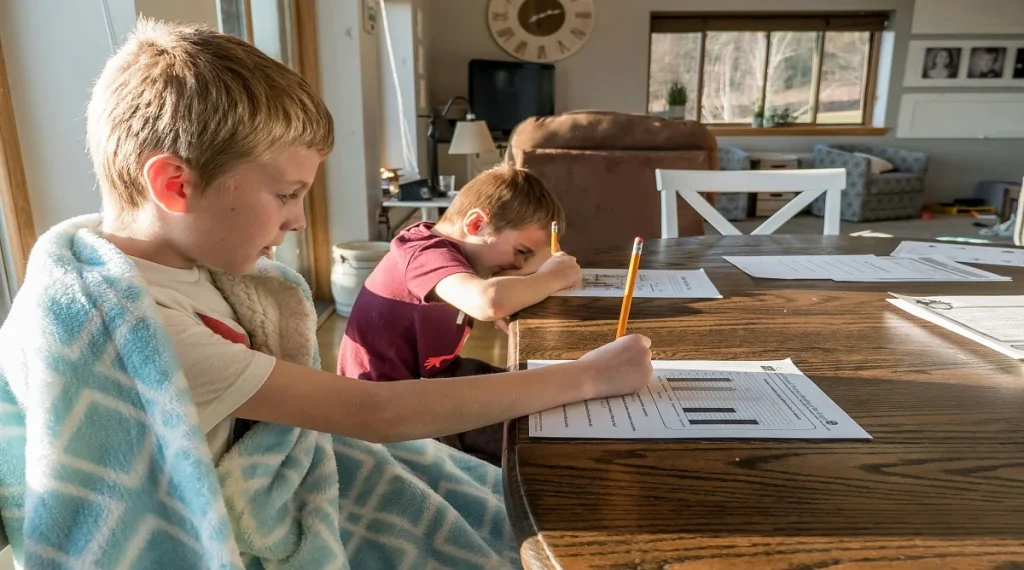
Homework myths often make after-school time more stressful than it needs to be. Many families hear that homework should follow the same routine every day, that children should start immediately after school, or that struggling means a lack of effort. While these ideas may sound practical, they often create pressure instead of helping children work more effectively.
Family and education experts often explain that homework routines work best when they match a child’s energy, attention, and daily schedule. Not every child is ready to focus at the same time or in the same way. Looking closely at common homework myths can help families replace unnecessary stress with more realistic and supportive routines.
Why Homework Myths Often Increase After-School Stress
After school, children are managing several transitions at once. They move from structured classroom expectations to home life while also dealing with hunger, fatigue, social experiences, and unfinished thoughts from the day. When adults rely on rigid expectations, they may expect focus before the child is ready.
Child development specialists often point out that stress increases when homework is treated only as a behavior issue. In many cases, the real challenge is timing, routine structure, or unrealistic expectations. A better approach starts with understanding what homework actually asks of a child at that time of day.
1. Homework Should Begin the Minute a Child Gets Home
This is one of the most common misconceptions. While some children can begin right away, many need a short break, a snack, or some movement before they can concentrate again. Expecting immediate focus can increase resistance without improving results.
Education professionals often explain that after-school routines matter. A short reset period often helps children approach homework with more focus and less frustration.
2. A Child Who Delays Homework Is Being Lazy
Delaying homework doesn’t always mean laziness. Children may hesitate because they feel tired, overwhelmed, confused, or unsure where to begin. What looks like avoidance is often a signal that the task feels too big or unclear.
Family therapists often note that progress improves when adults look for the reason behind the delay instead of assuming the worst. A calmer response can help uncover what support the child actually needs.
3. More Homework Time Always Means Better Learning
Spending more time on homework doesn’t necessarily lead to better results. For many children, attention drops when work continues without breaks or clear structure. Longer sessions can lead to frustration if the child is no longer mentally engaged.
Researchers in child learning often explain that the quality of focus matters more than the total time spent. Short, structured work periods are often more effective than long, exhausting ones.

Credit: Jessica Lewis / Unsplash
4. Children Should Know How to Manage Homework Without Support
Independence is important, but it develops gradually. Many children—especially in the early years—still need help building the habits that make homework manageable. This can include knowing when to start, how to organize materials, and how to break tasks into smaller steps.
School support specialists often explain that expecting full independence too early can make homework more difficult. Support doesn’t mean doing the work for the child—it means helping them learn how to approach it in a way that feels manageable.
5. If Homework Causes Conflict, the Child Just Needs Stricter Rules
Rules can help, but stricter rules alone don’t solve every homework struggle. Conflict often comes from fatigue, unclear expectations, too much pressure, or routines that don’t match the child’s actual energy level. Adding more pressure without adjusting the system can increase tension.
Family communication experts often note that homework improves when routines are clear, timing is realistic, and expectations are consistent. A well-structured approach usually works better than simply tightening control.
6. Parents Should Correct Every Mistake During Homework
It’s natural for adults to want to fix mistakes right away, but constant correction can make children more anxious and less confident. When every step is monitored, children may start relying on adult approval instead of thinking independently.
Education professionals often suggest guiding children to notice and correct their own mistakes when possible. This builds problem-solving skills and helps homework become a more independent process over time.
7. Homework Struggles Mean the Child Does Not Care About School
This is one of the more damaging myths because it turns a routine challenge into a judgment about the child. A child may care about school and still struggle with homework due to tiredness, distraction, difficulty with the material, or an unhelpful routine.
Child development experts often explain that homework behavior needs context. Instead of assuming a lack of effort, it’s often more helpful to look at what support, structure, or timing adjustments might make the task easier.
Credit: Vitaly Gariev / Unsplash
8. One Homework Routine Should Work for Every Child
Children vary in energy, attention, temperament, and learning style. A routine that works well for one child may not suit another—even within the same family. Some children are ready to focus right away, while others need movement or a break first. Some benefit from close guidance, while others concentrate better with more independence.
Family experts often explain that effective routines are consistent but flexible enough to match the child. The goal isn’t to find one perfect method—it’s to create a pattern that makes homework feel manageable in that particular home.
What Family Experts Recommend Instead of Homework Myths
Rather than relying on rigid ideas, many experts suggest a calmer, more practical approach. This can include a short decompression period after school, a predictable snack, a clear start time for homework, a prepared workspace, and breaking tasks into smaller steps. These supports often improve follow-through without turning homework into a daily struggle.
Experts also note that parents help most by guiding without taking over. School-age children benefit from structure, but they also need space to build independence within that structure. Strong study habits at home tend to grow through steady, realistic routines—not pressure.
Frequently Asked Questions
Q: What are common homework myths?
A: Common homework myths include the ideas that homework should start immediately after school, that longer work always means better learning, and that delay always means laziness.
Q: Do all children need the same homework routine?
A: No, many experts explain that homework routines should be consistent but also fit the child’s age, energy level, and attention patterns.
Q: What helps reduce homework stress at home?
A: A short after-school break, clear homework timing, smaller work steps, and calm communication often help reduce homework stress at home.
Q: Should parents sit with children during all homework?
A: Not always. Many children benefit from some support, but experts often recommend gradually building independence rather than providing constant direct supervision.
Key Takeaway
Homework myths often make after-school time harder by creating rigid expectations that don’t match how children actually learn or recover after school. Family experts tend to recommend calmer routines, realistic timing, smaller steps, and support that builds independence gradually. Children usually do better when homework feels structured rather than stressful. Replacing common myths with steadier, more flexible routines can make study habits at home easier for both children and adults.
INTERNAL LINKING SUGGESTIONS
- 8 After-School Habits That Support Better Focus During Homework Time
- How to Build Consistent Homework Habits That Reduce Daily Stress
- How to Create an After-School Routine That Feels Calmer for Families