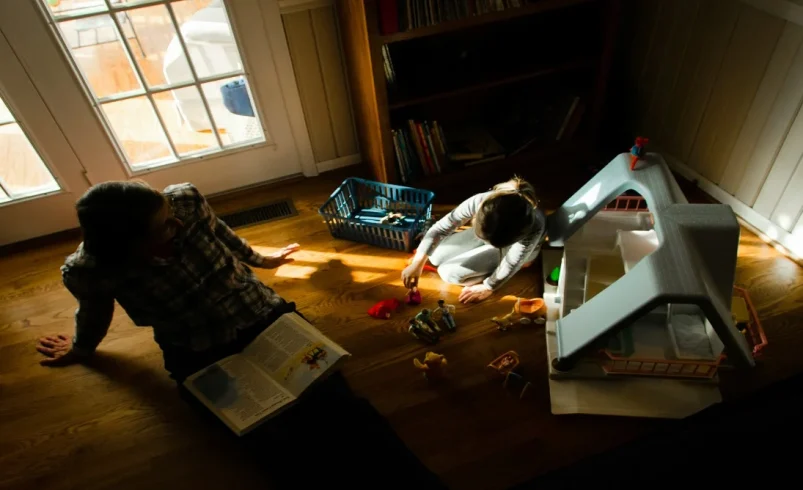
Routine myths often make family life feel harder because they create unrealistic expectations about what good routines should look like. Some adults hear that routines must be strict to work well. Others hear that routines remove fun, limit independence, or only matter for very young children. These ideas can make daily family life feel more confusing than it needs to be.
Family experts often explain that routines are not about controlling every minute of the day. They are usually about creating enough predictability to reduce stress, support child behavior, and help the home run more smoothly. Looking closely at common routine myths can help families build routines that feel useful instead of heavy.
Why routine myths often create more stress at home
Many routine myths come from the idea that routines should work perfectly every day. Real family life rarely works that way. Children get tired, schedules change, and adults juggle work, school, meals, and household tasks all at once. When routines are treated like a test families must pass, they often become a source of pressure instead of support.
Family therapists often note that routines work best when they are flexible enough to fit ordinary life. A routine does not need to look perfect to be helpful. It needs to create enough structure that family members know what usually happens next. That is why routine myths often do more harm than good.
1. Good routines must stay exactly the same every day
This is one of the most common routine myths. Routines help because they create familiar patterns, not because every detail is fixed with no change. A family may keep the same general order for mornings or evenings even when the exact timing shifts. The pattern matters more than perfect sameness.
Experts in home organization often explain that useful routines are stable but not rigid. Children usually benefit from knowing the flow of the day even when one part of that day changes a little. Flexibility inside structure often works better than strict rules that break under real life pressure.
2. Routines only matter for toddlers and very young children
Many adults assume routines become less important once children reach school age. In reality, routines often stay important for many years. Older children still benefit from predictable mornings, after-school structure, homework habits, bedtime patterns, and shared family expectations.
Child development specialists often explain that routines continue supporting memory, follow-through, and emotional regulation long after early childhood ends. School-age children may look more independent, but they often still rely on routines to manage everyday demands well.
3. Strong routines take too much time to create
Some families avoid routines because they imagine a long complicated system with charts, labels, and detailed schedules for every hour. In most homes, helpful routines are much simpler than that. A strong routine may only be a short repeated order of events such as snack, homework, and outside time after school.
Family routine experts often note that small routines usually last longer than large elaborate systems. A shorter routine that happens often is usually more useful than a bigger system that disappears after one busy week.
4. Routines make family life feel boring
This is another one of the routine myths that often keeps families from using routines more confidently. Predictable structure does not remove fun. In many homes, routines actually make room for more enjoyable moments because less energy is spent on confusion, searching, and repeated reminders.
Family wellness professionals often explain that routines reduce background stress. When practical parts of the day work more smoothly, children and adults often have more emotional energy for play, conversation, and shared family time.
5. If a child resists a routine, the routine is not working
Children often resist routines even when the routine is helpful. Resistance can happen because transitions are hard, because the child is tired, or because the routine is still new. This does not always mean the routine itself is a bad idea. It may mean the child still needs time and support to adjust.
Experts in child behavior often note that routines usually become easier through repetition. Some children push back at first because any repeated limit feels challenging before it becomes familiar.
6. Routine myths say routines stop children from becoming independent
Some adults worry that routines create too much adult control and keep children from learning independence. In many cases, the opposite is true. Family routines often make independence easier because children know what steps belong to a task and when those steps usually happen.
Child development experts often explain that independence grows best inside predictable systems. A child who knows the order of the morning routine or where school items belong often needs fewer reminders over time, not more.
7. One routine should work for every child in the same way
This myth creates frustration because children differ in temperament, energy, age, and attention style. One child may need more movement before homework. Another may need quiet first. Some children respond well to visual reminders, while others do better with verbal cues. A strong routine often needs small adjustments based on the child.
Family communication experts often explain that routines should fit the household rather than force the household into one fixed mold. The best routine is the one children can actually follow and adults can actually maintain.
8. If a routine breaks once, the whole system failed
This may be one of the most discouraging routine myths. Families often assume that one chaotic morning or one missed evening step means the routine is not working. In reality, routines are long-term patterns, not one-day performances. A rough day does not erase the value of a helpful system.
Experts in family organization often note that routines work over time because they are repeated often, not because they go perfectly every day. Families usually do better when they return to the routine the next day instead of judging the whole system by one hard moment.

What family experts often recommend instead of routine myths
Family experts often recommend routines that are simple, visible, and tied to the real flow of the day. This may include a small morning order, an after-school reset, a bedtime pattern, or a weekly family planning habit. The goal is not to organize every possible detail. The goal is to create enough structure that the household feels easier to manage.
Experts also recommend reviewing routines based on what keeps going wrong rather than what sounds ideal on paper. If mornings are stressful, the routine may need more night-before preparation. If homework time is hard, the routine may need a better transition. Practical changes usually help more than chasing a perfect system.
Frequently Asked Questions
Q: What are common routine myths in family life?
A: Common routine myths include the idea that routines must be rigid, that they only matter for young children, and that one rough day means the routine failed.
Q: Do routines really help child behavior?
A: Yes, routines often help child behavior because they reduce uncertainty, support transitions, and make daily expectations easier to understand.
Q: Can routines support independence in children?
A: Yes, routines often support independence by helping children know what comes next, where things belong, and how repeated tasks usually work.
Q: Should family routines stay exactly the same every day?
A: Not usually. Most family experts recommend stable patterns with enough flexibility to handle normal changes in schedule and daily life.
Key Takeaway
Routine myths often make family life feel more stressful by turning routines into something too strict, too complicated, or too easy to abandon. Family experts usually recommend routines that are simple, flexible, and built around the real flow of the household. Strong family routines often support child behavior, home organization, and calmer daily transitions. Replacing routine myths with practical habits can make everyday family life feel much easier to manage.