Many families want their children to pack school bags more independently, but the process often turns out to be more challenging than expected. A child might forget folders, leave a lunch box behind, or pack items that aren’t actually needed. These situations can make mornings feel rushed and leave adults repeating the same reminders day after day.
School and child development experts often explain that independence with school preparation develops through routine, practice, and clear structure. When children forget what to pack, it’s not usually about avoiding responsibility. More often, they’re still learning how to organize repeated tasks in the right order. A simpler, more consistent system can make this process easier for everyone.
Why children need support before they can pack school bags more independently
Adults often think of packing a school bag as a single task, but for children it involves several smaller steps. They need to remember what came home, know where those items go, decide what needs to return the next day, and fit all of that into a morning or evening routine. This process relies on memory, attention, planning, and repeated practice.
Child development specialists often note that these skills are still developing throughout the early school years. A child may understand what needs to be done but still need guidance to turn that understanding into a reliable routine. That’s why support usually comes first before true independence can develop.
How school organization affects forgotten items
Organization plays a big role in whether items get forgotten. If papers end up in different places, lunch items move around the kitchen, or school shoes don’t have a consistent spot, children are forced to remember too many details at once. That makes it much easier for something important to be missed.
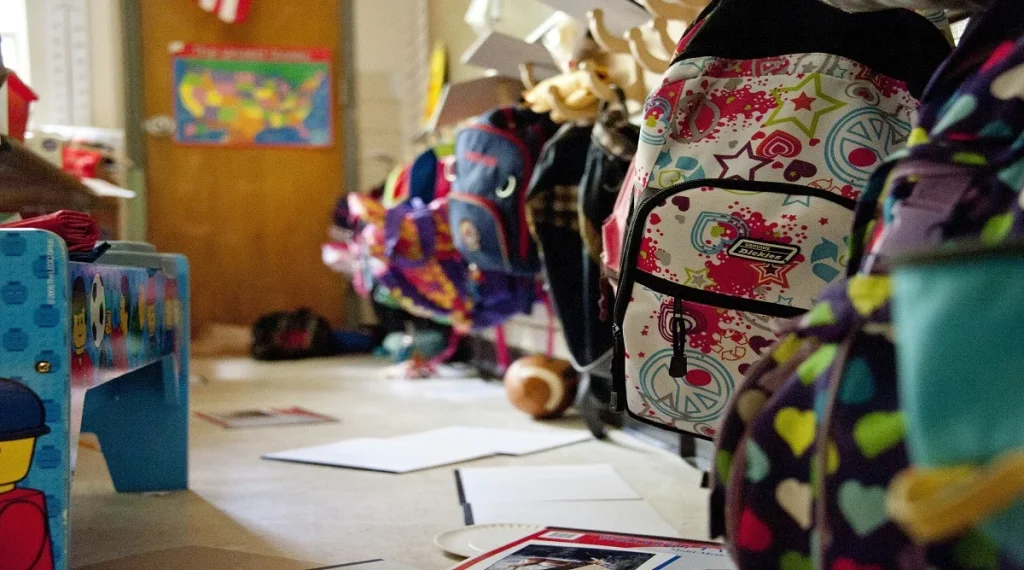
Experts in school readiness often explain that children remember routines better when their environment supports them. A designated backpack area, a tray for papers, or a simple checklist can reduce how much a child has to keep in mind. Good organization often lowers stress while independence is still developing.
Step 1: Choose one consistent time to pack school bags
One of the most effective ways to build independence is to pick the same time each day for packing. In many homes, evening works better because there’s more time and less pressure. Other families may prefer a quick morning check if that fits their routine.
Family organization professionals often recommend choosing a time that’s easy to repeat rather than one that seems ideal on paper. Routines become stronger when they happen at a predictable point in the day, helping children understand when packing their school bag fits into their schedule.
Step 2: Keep school items in one visible place
Children usually do better when school items have clear, consistent locations. A hook for the backpack, a tray for papers, a set spot for lunch items, and one place for shoes or jackets can make a noticeable difference. This reduces the number of decisions children need to make each day.
Home organization experts often explain that when the environment is set up well, it supports the routine automatically. Children are far more likely to pack what they need when items are easy to see and always in the same place, rather than scattered throughout the house.

Credit: CDC / Unsplash
Step 3: Use a short checklist to pack school bags more independently
A checklist can make the routine clearer and easier to follow. Children often respond better when they can see each step instead of hearing multiple reminders. A simple list might include items like a folder, lunch, water bottle, homework, a library book, and a jacket. Younger children may benefit from picture-based lists, while older children can use short written prompts.
School support specialists often point out that checklists help children pack school bags more independently by moving some of the responsibility away from adult reminders and into a visible system. Over time, the checklist may not be needed as much, but it plays an important role in building the habit early on.
Step 4: Practice the routine with support before expecting independence
Most children need some guided practice before they can manage school bag preparation on their own. Adults can go through the steps alongside the child for several days or weeks, keeping the order consistent each time. This helps the child connect the routine with the actual items and the right time of day.
Child learning experts often explain that independence develops through repeated, supported practice rather than being handed over all at once. When children repeat the same routine consistently, they are more likely to handle it independently later.
Step 5: Let the child do the action whenever possible
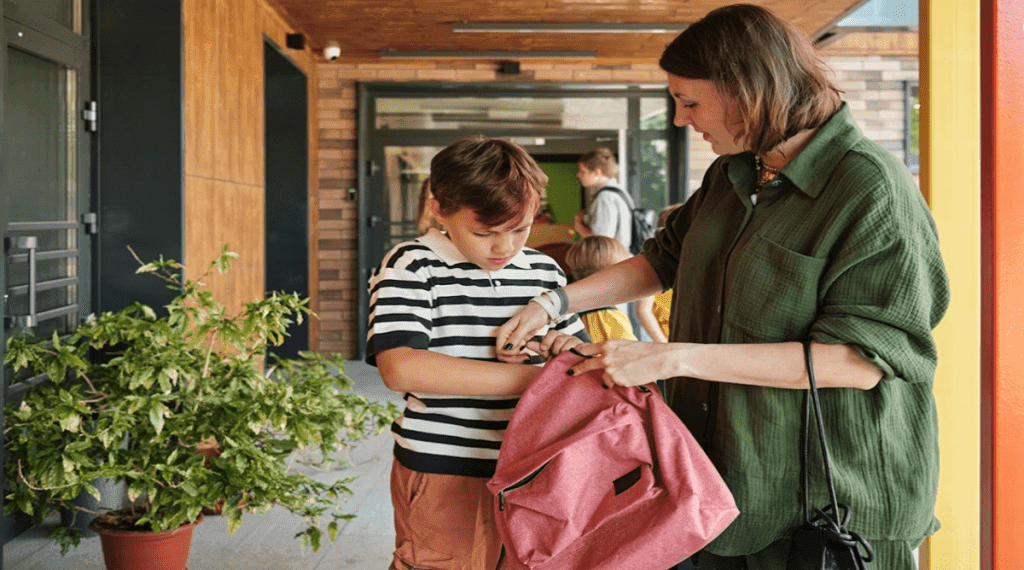
It can feel quicker for adults to step in and pack the bag themselves, but independence grows through doing, not watching. Even if it takes longer at first, it helps to let the child place items in the bag, zip it up, and go through the checklist on their own.
Family therapists often note that confidence builds when children are trusted with real responsibility. Adults can still guide and supervise calmly, but children usually learn more by handling each step themselves than by being told what to do repeatedly.
Step 6: Check the routine, not only the mistake
When something keeps getting forgotten, it’s not always about carelessness. Often, the routine itself needs adjustment. For example, a library book left behind each week might need a reminder built into the night before. A lunch box that gets forgotten may need to be placed next to the backpack instead of staying in the fridge until the last minute.
Experts in school organization often recommend improving the system rather than repeating the same corrections. When families look closely at where the routine breaks down, they can usually find a simple way to make school preparation smoother and more reliable.
Credit: Andrej Lišakov / Unsplash
What often makes school bag packing harder for children
Packing a school bag can become more difficult when the routine changes from day to day, when different adults give different instructions, or when supplies don’t have a clear, consistent place. Children may also struggle more if the task is left until late in the evening when they’re tired, or squeezed into a rushed morning when their attention is already divided.
Family wellness professionals often note that children respond better to fewer words and stronger, more predictable patterns. A short, consistent routine repeated each day is usually more effective than long explanations that vary from one day to the next.
How families can build independence over time
Most children don’t move straight from full adult support to complete independence. It typically happens in stages. In the beginning, the adult leads while the child helps. Over time, the child takes the lead while the adult checks. Eventually, the child manages most of the routine on their own, with only a quick review when needed.
Child development experts often explain that this gradual approach supports confidence and keeps expectations realistic. When independence is built step by step, children are more likely to succeed and less likely to feel overwhelmed.
Frequently Asked Questions
Q: At what age can children pack school bags more independently?
A: Many children can begin packing parts of their school bags independently in early school years, especially when routines and checklists are clear.
Q: What helps children remember what to put in a school bag?
A: A consistent packing time, one clear storage area, and a short checklist often help children remember what to put in a school bag.
Q: Should parents check the school bag every day?
A: Many families find it helpful to check the bag while children are still learning the routine, then slowly reduce that support as independence improves.
Q: Why do children keep forgetting school items even after reminders?
A: Children may keep forgetting school items because memory and planning skills are still growing, and the home routine may need stronger visual support or better timing.
Key Takeaway
Children usually learn to pack their school bags more independently through consistent routines, clear systems, and regular practice not just repeated reminders. Having a set time for packing, designated places for school items, and a simple checklist can reduce forgotten items and make mornings less stressful. Independence tends to develop best when adults guide the process without stepping in too quickly. Over time, these small organization habits can make school preparation feel smoother and more manageable for the whole family.
INTERNAL LINKING SUGGESTIONS
- Why Children Forget School Items and What Experts Say Helps
- How to Help Children Follow School Morning Checklists More Independently
- How to Create a Night Before Routine That Makes Mornings Easier