Why Children Defend a Sibling in Public but Argue With Them at Home
July 23, 2026
0
Two siblings may argue about a seat, a toy, a borrowed shirt, or who received the larger portion. They interrupt each other, complain about unfairness, and insist they
Two siblings may argue about a seat, a toy, a borrowed shirt, or who received the larger portion. They interrupt each other, complain about unfairness, and insist they cannot share the same room for another minute. Then someone outside the family criticizes one of them, and the other child responds immediately: “Do not talk about my brother like that.”
This sudden loyalty can surprise parents. At home, the children may behave like competitors. Around classmates, cousins, teammates, or unfamiliar adults, they can become protective allies.
The two behaviors are not necessarily contradictory. Home and public settings place different demands on a sibling relationship. At home, children may feel safe enough to express frustration, compete for attention, and test limits. In public, shared identity becomes more visible. A sibling may represent family, familiarity, and belonging in a wider social environment.
Parents can support this loyalty while still addressing conflict at home. Protecting a sibling does not erase hurtful behavior, and arguing does not mean the relationship lacks care.
Home often feels safe enough for unfiltered behavior
Children usually show their most controlled behavior where social consequences feel strongest. At school or during an activity, they may hold back irritation because classmates, teachers, and coaches are watching.
At home, the child knows the relationship will continue after the argument. This security can make family members the safest people with whom to release frustration.
That does not make yelling, grabbing, insults, or intimidation acceptable. It helps explain why children may seem kinder to outsiders than to one another. Home feels permanent, so children may take the relationship for granted while still caring deeply about it.
Siblings share a family identity outside the home
In public, siblings may become more aware that they belong to the same family. They may share a surname, routines, memories, cultural practices, relatives, jokes, and household experiences that other people do not fully understand.
When one sibling is embarrassed or criticized, the other may experience the moment as an attack on the family group rather than only on one child.
A child who was annoyed with a brother five minutes earlier may still think, “I am allowed to be angry with him, but you are not allowed to treat him badly.” This form of loyalty often appears before children can explain it clearly.
Public criticism can activate protective instincts
A sibling may notice when another child is overwhelmed, outnumbered, misunderstood, or unable to respond. The protective child may step in because the situation feels unfair.
This can happen even when the siblings regularly argue. Their private conflict contains familiar rules and limits. An outsider’s behavior may feel less predictable.
The protecting sibling may understand vulnerabilities that others miss. A child may know that a brother becomes quiet when embarrassed, that a sister needs extra time to answer, or that teasing about a certain topic is especially painful.
This private knowledge can create quick action before an adult notices what is happening.
Older siblings may feel responsible even when no adult assigned the role
Birth order can influence how children understand responsibility. An older sibling may believe it is necessary to explain rules, guide a younger child, or speak when the younger child cannot.
This responsibility may come from family expectations, but children can also create it themselves. The older child notices having more size, experience, social confidence, or knowledge and begins acting like a protector.
The role can be positive when it supports safety and reassurance. It becomes difficult when the older child feels responsible for every mistake, friendship problem, or emotional reaction the younger child experiences.
Parents should appreciate caring behavior without making one child a substitute parent.
Younger siblings can become protective too
Protection is not limited to older children. A younger sibling may defend an older child who is shy, upset, injured, or being treated unfairly.
The younger child may have fewer social skills but strong emotional loyalty. The response might appear as standing beside the sibling, telling an adult what happened, refusing to join the teasing, or finding help.
These moments show that influence within sibling relationships does not always move from older to younger. Each child may carry different strengths.
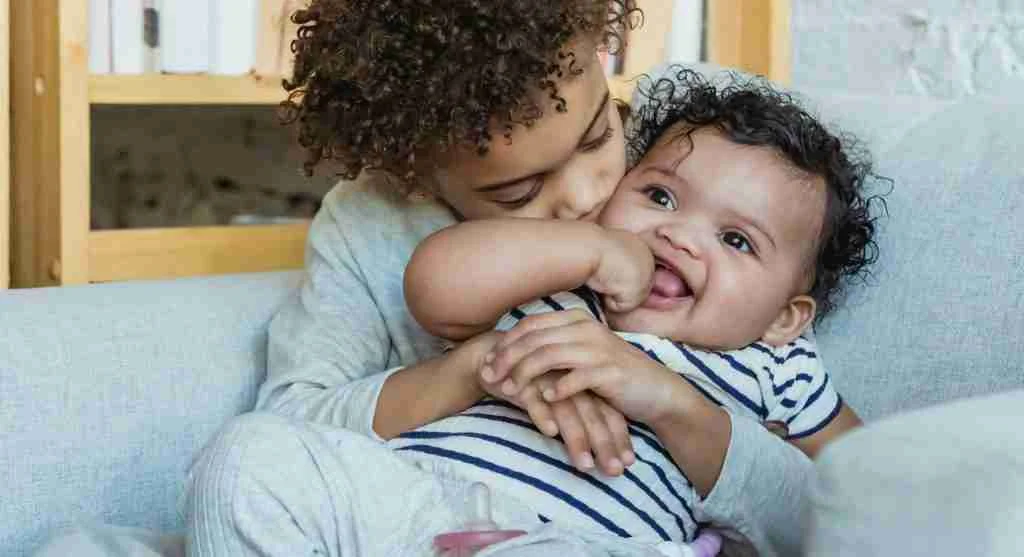
Credit:Keira Burton / Pexels | Big Sister Little Brother Comfort
Shared experiences can create loyalty beneath daily conflict
Siblings often witness the same family events from different positions. They remember moves, holidays, illnesses, school changes, household stress, funny accidents, and everyday routines.
They may disagree about what happened, but they still share a history that friends do not have. That shared history can create a bond beneath ordinary irritation.
A child may complain constantly about a sibling’s habits while still feeling that this person is part of the child’s emotional home. The bond may become most visible when the family enters an unfamiliar environment.
Competition and loyalty can exist at the same time
Children may compete for attention, privacy, space, possessions, achievements, and parental approval. Competition can make them focus on differences and fairness.
Loyalty works on a different level. It reflects attachment and shared belonging. A child can want to win against a sibling and still refuse to let someone else humiliate that sibling.
Parents sometimes expect one emotion to cancel the other. Real relationships often contain affection, jealousy, irritation, pride, protectiveness, and rivalry together.
Understanding this mixture prevents adults from making extreme conclusions after one argument or one protective moment.
Public loyalty does not prove the home conflict is harmless
A child defending a sibling outside the home does not mean repeated cruelty at home should be ignored. Children can care about each other and still develop damaging patterns.
Parents should look at what happens during private conflict. Are both children able to speak? Does one child regularly use size, age, information, or social power to control the other? Are belongings damaged? Does one sibling seem afraid?
Loyalty is a strength, but it is not evidence that every part of the relationship is healthy.
Avoid romanticizing constant sibling fighting
Adults sometimes say, “They fight because they love each other,” or “All siblings act like that.” These statements can minimize real distress.
Disagreement is common. Repeated humiliation, physical aggression, threats, and deliberate exclusion require a different response.
Parents can recognize the relationship’s protective side while setting firm limits: “I saw that you stood up for your sister today. That showed care. At home, you still may not call her names.”
This separates affection from behavior. Love does not remove responsibility.
Do not use public loyalty to shame the children during later arguments
A parent may say, “You defended him yesterday, so why are you fighting now?” The question assumes caring children should not become angry with each other.
A better approach is to use the protective moment as evidence that repair is possible. A parent might say, “I know this relationship matters to both of you. Let us solve what happened without hurting each other.”
This reminds the children of the bond without suggesting that conflict makes their loyalty false.
Teach the difference between defending and escalating
A child may try to protect a sibling by yelling, threatening, pushing, or insulting the other person. The protective intention does not make unsafe behavior acceptable.
Children need safer options:
Stand beside the sibling.
Say, “Stop. That is not okay.”
Help the sibling leave.
Call a trusted adult.
Describe what happened clearly.
Avoid joining a growing crowd.
The goal is to improve safety, not win a confrontation.
Explain when adult help is necessary
Some children believe loyalty means handling the situation alone. They may hide bullying, threats, unsafe online messages, or physical harm because they promised to protect a sibling.
Parents can explain that getting help is part of protection. A child should involve an adult when someone is injured, threatened, repeatedly targeted, pressured to keep harmful secrets, or afraid to return to a setting.
A sibling should never be expected to carry a serious safety problem privately.
Keep one child from becoming the family reporter
A protective child may begin reporting every mistake a sibling makes. The child may believe constant monitoring is a form of care.
Parents should distinguish between safety information and ordinary sibling management. Reporting danger, injury, or serious harm is important. Reporting every unfinished chore, small complaint, or rule mistake can create resentment.
A useful boundary is, “Tell an adult when someone may be unsafe. For ordinary disagreements, first try a respectful solution or step away.”
Help the defended child retain a voice
A confident sibling may answer every question, explain every problem, and speak before the other child has a chance.
Parents can appreciate the help and still return the conversation to the child involved: “Thank you for telling me what you noticed. I want to hear from your brother now.”
Protection should not turn into control. Children need opportunities to speak for themselves when they are able.
Use calm moments to discuss what support feels helpful
Siblings may have different preferences. One child may appreciate immediate defense. Another may feel embarrassed when a sibling speaks publicly.
Families can discuss questions such as:
When do you want your sibling to step in?
When would you rather handle the situation yourself?
What sign can you use when you need help?
Which problems should go directly to an adult?
These conversations make support more respectful and less automatic.
Notice quiet forms of sibling loyalty
Protection is not always dramatic. A child may save a seat, explain an unfamiliar routine, bring a forgotten item, include a sibling in a game, redirect an embarrassing question, or wait nearby during a difficult moment.
Parents can notice these actions without turning them into a major performance. “You saw that he was unsure where to go and waited for him” identifies the caring behavior clearly.
Specific recognition helps children understand that loyalty includes everyday consideration, not only confrontation.
Create space for positive contact that is not forced
If siblings interact mainly through chores, competition, and shared restrictions, conflict can become the strongest pattern. Occasional low-pressure activities may give them another way to relate.
The activity does not need to be a formal bonding exercise. They might prepare a snack, complete a short task, play a cooperative game, care for a pet, or choose music for a drive.
Parents should avoid demanding visible closeness. The goal is to create opportunities for neutral or positive contact, not to require children to perform affection.
Do not compare how much each sibling cares
One child may show loyalty loudly while another shows it privately. Comparing them can create pressure and resentment.
Statements such as “Your brother always defends you, but you never defend him” may ignore differences in confidence, age, temperament, or what happened in a specific situation.
Address the behavior that is needed without measuring affection. “When your sister was being teased, you joined the laughter. We need to talk about a safer response” is clearer than questioning whether the child cares.
Support repair after home conflict
Sibling loyalty becomes stronger when children know how to repair ordinary harm. A quick command to apologize may end the argument without restoring trust.
A fuller repair can include:
Stopping the harmful action
Returning or replacing an item
Allowing the other child to explain the impact
Taking responsibility without excuses
Choosing what should happen differently next time
Repair teaches children that the relationship can survive conflict without pretending the conflict did not matter.
When parents should look more closely
Arguments between siblings are common, and public protectiveness is usually a positive sign. Additional support may be useful when conflict includes repeated physical harm, intimidation, destruction of belongings, severe humiliation, or one child consistently appearing fearful.
Closer attention may also help when one child feels responsible for the sibling’s safety, emotions, schoolwork, or social life to an unhealthy degree.
A pediatric professional, school counselor, or qualified family specialist may help parents understand power differences, stress, communication patterns, or other factors affecting the relationship.
How sibling loyalty changes with age
Young children may protect a sibling through physical closeness or by calling an adult. School-age children may defend verbally, explain social rules, or include the sibling in a group.
Tweens and teenagers may appear less openly affectionate while still watching out for one another. They may share practical information, provide social warnings, offer transportation help, or step in during serious moments.
The form of loyalty may change as privacy and independence increase. Parents should not assume that less visible affection means the bond has disappeared.
Frequently Asked Questions
Q: Why do siblings defend each other in public but fight at home?
A: Home feels secure enough for competition and frustration, while public situations can make shared family identity and protective instincts more visible.
Q: Does public loyalty mean sibling fighting is harmless?
A: No. Children can care deeply about each other while still developing harmful conflict patterns that require clear limits and adult support.
Q: How should a child defend a sibling safely?
A: The child can use a clear boundary, stand nearby, help the sibling leave, describe what happened, and involve a trusted adult instead of escalating physically.
Q: Should older siblings be responsible for younger siblings?
A: Older children can offer reasonable help, but adults should remain responsible for safety, discipline, transportation, and major emotional or practical needs.
Q: When does sibling conflict require extra support?
A: Support may be needed when there is repeated aggression, fear, intimidation, severe humiliation, destruction of belongings, or a major power imbalance.
Key Takeaway
Children may defend siblings in public while arguing with them at home because loyalty and conflict can exist in the same relationship. Home offers safety for frustration and competition, while outside situations make shared identity and protectiveness more visible. Parents can strengthen the positive side of sibling loyalty by teaching safe ways to intervene, preventing one child from becoming responsible for another, and addressing harmful home behavior without dismissing the care beneath it.