How to Create a Family Clothing Rotation That Reduces Laundry Confusion
July 17, 2026
0
Family laundry problems are not always caused by having too much washing. Confusion often begins before the machine is turned on. A school shirt is mixed with outgrown
Family laundry problems are not always caused by having too much washing. Confusion often begins before the machine is turned on. A school shirt is mixed with outgrown clothes, a child places a lightly worn sweater on the floor, clean socks remain in a basket, and sports clothing disappears beneath ordinary items. By morning, everyone may have plenty of clothes but nothing easy to find.
A family clothing rotation creates a smaller, clearer group of garments that stays in regular use. Instead of treating every shirt, pair of trousers, uniform piece, and seasonal item as equally active, the family identifies what is currently needed and gives each category a dependable place.
The system is not about creating a perfectly arranged wardrobe. It is designed to answer five practical questions: What is clean? What has been worn but can be used again? What is dirty? What no longer fits? What needs repair? When those answers are visible, children can participate more easily, important outfits are less likely to disappear, and laundry becomes a repeating flow rather than a weekly search operation.
Why clothing becomes confusing even in organized homes
Clothes move through several stages every day. They leave a drawer, get worn, come off, wait somewhere, enter the wash, dry, and return to storage. Confusion appears when there is no clear place for one or more of those stages. A child may know where clean shirts belong but not where to place jeans that were worn for one hour and are still clean enough to use again. The item lands on a chair. Soon pajamas, a school jumper, and a towel join it. The chair stops representing one category and becomes a general clothing pile.
Another problem appears when inactive clothing remains mixed with everyday clothing. Outgrown trousers, heavy winter layers, special-event outfits, and uncomfortable shirts occupy the same space as items needed each morning. The larger the search area becomes, the harder it is to notice what is actually missing.
A rotation is different from owning fewer clothes
A family clothing rotation does not require removing most of the wardrobe. It means keeping the currently useful group easiest to reach.
Seasonal garments, formal wear, hand-me-downs for future use, and sentimental clothing can still be stored elsewhere. The active drawers and shelves contain the items the family expects to use during the current weeks.
This makes the wardrobe easier to read. When only relevant items are visible, parents can quickly notice that a child has one school shirt left, no clean activity shorts, or several unused tops taking up space.
Begin by identifying each person’s real clothing needs
Before buying containers or creating labels, look at how the family actually spends the week. A child may need school clothes, casual outfits, activity wear, pajamas, undergarments, and one weather layer. Another child may wear a uniform most days and need fewer everyday combinations.
Create a short list for each person:
School or childcare clothing
Everyday home clothing
Sports or activity clothing
Pajamas
Undergarments and socks
Weather layers
One or two special-purpose outfits
The list prevents the rotation from being built around appearance alone. Its purpose is to support real mornings, activities, weather, and washing patterns.
Choose a manageable active quantity
There is no perfect number of outfits for every household. The right amount depends on how often laundry is washed, whether uniforms are required, how messy daily activities are, and whether the family can dry clothing quickly.
A practical active supply should cover the normal gap between laundry days with a small backup. Too few clothes create emergency washing. Too many make it difficult to see what is clean and encourage piles to grow.
Families can begin without strict numbers. Place the most-used items in the active area and move the rest into temporary storage. After two weeks, notice what was missed and what remained untouched.
Create five clothing zones
A useful rotation needs more than a clean drawer and a dirty basket. Five clear zones prevent most clothing confusion:
Clean and ready: Clothing that can be worn immediately.
Wear again: Items that were used briefly and remain clean enough for another wear.
Dirty: Clothing ready for washing.
Needs attention: Items requiring stain treatment, repair, or a missing button.
Leaving the rotation: Clothing that is outgrown, uncomfortable, damaged beyond use, or no longer needed.
The zones can be drawers, shelves, hooks, baskets, or labeled sections. They do not need to look identical in every room. They only need to have one clear meaning.
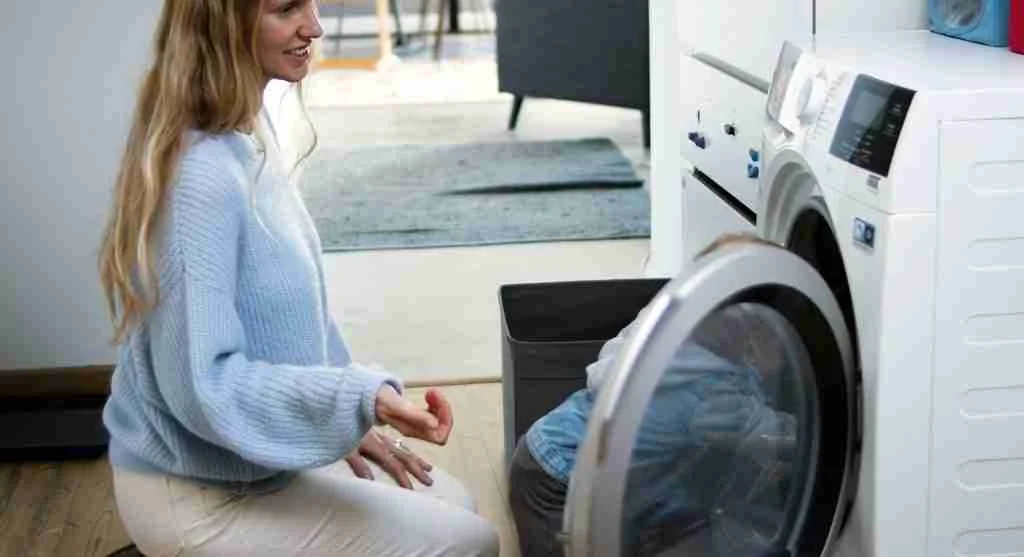
Credit:Kampus Production / Pexels | title: Organize Your Laundry with a Color-Coded System
Give lightly worn clothes a real home
The “wear again” category is often the missing part of a family laundry system. Without it, clothes are either washed unnecessarily or dropped on furniture because they are not fully clean or fully dirty.
A hook, shallow basket, or small shelf can hold a limited number of lightly worn items. The space should remain small. If it fills, the wearer must decide whether each item returns to clean storage, gets worn soon, or moves to the laundry.
Do not allow the area to become a second wardrobe. One pair of jeans, a sweater, and a home outfit may be enough for many children.
Keep complete outfits together when mornings are difficult
Some children can choose clothing easily from separate drawers. Others become distracted, reject combinations, or discover missing pieces too late.
For those children, complete outfit groups may work better. A shirt and trousers can be folded together, placed in a labeled section, or selected for several school days at once.
This approach is especially useful for uniforms, activity days, picture days, and mornings with early departures. The child still has choices, but the number of decisions is reduced.
Separate special clothing from everyday clothing
Formal outfits, costumes, holiday wear, and rarely used accessories can make ordinary storage feel crowded. These items should have a separate location unless they are needed that week.
A labeled garment bag, upper shelf, or storage box protects special clothing while keeping it out of the morning search area.
Children are then less likely to pull out several unsuitable items while looking for one everyday shirt. Parents also avoid repeatedly refolding clothes that are rarely worn.
Build the laundry rhythm around essential categories
Many families wait until one large laundry pile becomes urgent. A rotation works better when the most important categories have a predictable washing rhythm.
Uniforms may be washed on certain evenings. Activity clothing may be handled immediately after practice. Bedding and towels may have their own day. Everyday clothing can move through the remaining cycle.
The schedule does not need to be rigid. Its purpose is to protect high-priority items from becoming trapped beneath less urgent washing.
A family may use a simple order: tomorrow’s needs first, limited-supply clothing second, everything else afterward.
Use a “last clean item” signal
Children often announce that they have no socks or school shirts only after the final clean one has been used. Parents can teach them to report when they reach the last clean item instead.
A child might say, “This is my last clean uniform top,” or place a small laundry marker in a visible spot. Younger children can use a picture card attached to the basket.
This gives the household time to respond before the need becomes an emergency. It also helps children understand that managing clothing includes noticing supply, not only choosing what to wear.
Give children one responsibility at each stage
Children are more likely to participate when their jobs are specific. “Help with laundry” is broad. “Put dirty clothes in the dark basket” or “Match your socks after they dry” is clear.
Age-appropriate jobs may include:
Placing worn clothing in the correct zone
Checking pockets
Turning clothes the right way out
Matching socks
Carrying folded clothing to a room
Placing pajamas or underwear in labeled drawers
Reporting tight, uncomfortable, or damaged items
The child does not need to manage the entire process to become more responsible. One consistent job builds stronger habits than occasional involvement in every step.
Make labels easy for children to understand
Written labels may work for older children, while younger children may need pictures or colors. A shirt symbol can mark tops, a moon can mark pajamas, and a simple laundry basket image can show where dirty clothing belongs.
Labels should describe categories the child already uses. Complicated systems with many narrow sections often fail because children cannot decide where an item belongs.
If family members repeatedly place clothes in the wrong section, simplify the categories before assuming they are being careless.
Handle outgrown clothing as soon as the problem is noticed
Clothes that no longer fit often return to the drawer because the family has not decided what happens next. The child pulls them out again, tries them on, becomes uncomfortable, and leaves them somewhere else.
Keep one limited outgrown basket. When a child reports that an item is tight, short, or uncomfortable, place it there immediately rather than returning it to active storage.
When the basket fills, sort the contents for hand-me-down storage, donation, textile recycling, repair, or disposal. The basket is a waiting area, not permanent storage.
Do not keep uncomfortable clothing in active rotation
An item may technically fit but remain unworn because the fabric scratches, the waistband bothers the child, the sleeves feel restrictive, or the style creates self-consciousness.
Parents may continue returning the item to the drawer because it is new or expensive. The child continues avoiding it, and the drawer appears fuller than the usable wardrobe really is.
Ask why certain items remain untouched. When a reasonable comfort problem cannot be adjusted, move the garment out of the active rotation. Keeping unusable clothing visible does not recover the money already spent.
Create a repair deadline
Clothing that needs a small repair can remain in a basket for months. By the time it is fixed, the child may have outgrown it.
Give repair items a decision date. A loose button, small seam opening, or missing drawstring should be addressed within a set period, such as one week or before the next laundry cycle.
If the family cannot complete the repair, decide whether to seek outside help, reuse the fabric, donate appropriately, or release the item. A repair basket should not become a hidden clothing graveyard.
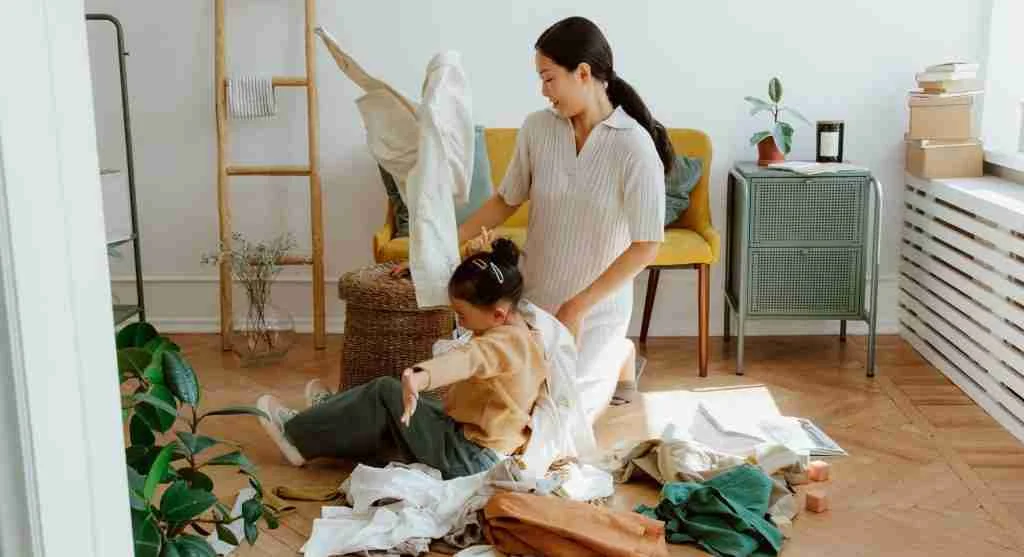
Credit:Ron Lach / Pexels | A mother and child sorting laundry together
Use temporary seasonal storage
Seasonal changes can double the number of clothes competing for space. Heavy layers remain while warm-weather items arrive, or summer clothing fills drawers long after colder days begin.
Store clearly unsuitable seasonal items outside the active area. Before packing them, check fit and condition. There is little value in storing items that will already be too small or badly damaged when the season returns.
Label containers by size, person, and season. “Sam winter current size” is more useful than a box marked only “clothes.”
Plan for sudden weather changes without filling every drawer
Families still need a small number of off-season backup items. One light layer during summer or one warm outfit during a mild season may be enough.
Keep these pieces in a clearly marked backup section. This protects the family from an unexpected cold or warm day without returning the full seasonal wardrobe to active storage.
Prevent clean laundry from becoming a permanent basket
A basket of clean clothing can appear harmless, but it creates another mixed zone. Family members search through it, unfold items, and remove only what they need. The remaining clothes become increasingly disorganized.
Give clean laundry a short completion window. It should move from drying to folding and then to storage within a realistic period.
When time is limited, prioritize putting away uniforms, underwear, socks, pajamas, and other high-use clothing. Less urgent items can follow, but the clean basket should not become the main wardrobe.
Use a weekly five-minute clothing check
A brief check can prevent larger problems. Once a week, each child or caregiver reviews the active clothing area.
Look for:
Empty essential categories
Clothes in the wrong zone
Items that no longer fit
Repair needs
Unused garments taking up active space
Upcoming events requiring specific clothing
The check should remain short. It is not a complete wardrobe clear-out. Its purpose is to keep the rotation accurate.
Avoid buying duplicates before checking the system
Families may buy more socks, shirts, or activity wear because none can be found. Later, the missing items appear in bags, under beds, inside clean baskets, or mixed with outgrown clothing.
Before replacing an everyday item, check each clothing zone, sports bags, school bags, and the current laundry cycle. The problem may be movement through the system rather than an actual shortage.
If items repeatedly disappear, consider whether the storage location is too difficult for the child to use or whether one category needs a clearer home.
Let the system change as children grow
A preschool child may need picture labels and complete outfit sets. A school-age child may manage separate drawers and report low supplies. A tween may prefer more control over outfit planning, privacy, and laundry timing.
The system should transfer responsibility gradually. Older children can learn care labels, basic washing decisions, stain reporting, and how to plan clothing around school or activity schedules.
A routine that never changes can become frustrating because it treats a more capable child as though nothing has developed.
Frequently Asked Questions
Q: What is a family clothing rotation?
A: It is a system that keeps the clothes currently needed for school, home, activities, sleep, and weather in active storage while moving unused or seasonal items elsewhere.
Q: Where should lightly worn clothes go?
A: Use a small wear-again hook, shelf, or basket. Limit the space so it does not become another uncontrolled clothing pile.
Q: How can children help with clothing organization?
A: Children can place clothing in the correct zone, check pockets, match socks, put away simple items, and report when essential clothing is nearly gone.
Q: What should families do with outgrown clothes?
A: Move them immediately into a limited outgrown basket, then sort them regularly for hand-me-down storage, donation, recycling, reuse, or disposal.
Q: How often should the clothing rotation be reviewed?
A: A quick weekly check helps, while a larger review can happen when seasons change, children grow, or the active storage becomes crowded.
Key Takeaway
A family clothing rotation reduces laundry confusion by giving every stage of clothing a clear place. Clean, lightly worn, dirty, repair-needed, and outgrown items should not compete inside the same drawer or pile. When the active wardrobe reflects real weekly needs, children can participate more successfully, missing outfits are noticed earlier, and families spend less time searching through clothes that are not currently useful.