Why Children Draw the Same Picture Again and Again
July 16, 2026
0
A child draws the same house every day. Another fills page after page with dinosaurs, rainbows, vehicles, princesses, monsters, or one invented character. The pictures may change only
A child draws the same house every day. Another fills page after page with dinosaurs, rainbows, vehicles, princesses, monsters, or one invented character. The pictures may change only slightly. A window moves, a new color appears, the character gains a hat, or the same scene is drawn from a different angle.
Adults may wonder why the child does not choose something new. They may suggest another subject, offer a drawing book, or ask whether the child is bored with repeating the same idea. To the child, however, repetition may not feel repetitive at all.
Drawing the same subject can serve several purposes. It allows children to practice a skill, explore small changes, tell an ongoing story, create a familiar starting point, or gain confidence through something they already understand. What appears to be one repeated picture may actually be a series of experiments.
Parents do not need to push children away from a favorite subject to support creativity. They can pay attention to what changes, ask open questions, offer new materials, and let the child decide when the drawing idea has run its course.
Repetition helps children build physical control
Drawing depends on many small movements. A child must control pressure, direction, shape, spacing, and the movement of the hand across the page. These skills become easier through practice.
When children draw the same object repeatedly, they do not have to invent every part from the beginning. They can focus on making a circle smoother, placing eyes more evenly, connecting lines, or controlling the size of a shape.
A repeated drawing may therefore function like practicing the same dance step or throwing a ball several times. The child is learning how a movement feels and how to produce it more reliably.
Adults may notice that the first picture is small and uneven while later versions contain clearer shapes and more confident lines. The subject has stayed the same, but the child’s control has changed.
A familiar subject reduces the number of decisions
A blank page can create many choices. The child must decide what to draw, where to begin, which colors to use, how large the picture should be, and what details belong in it.
A favorite subject removes some of that uncertainty. The child already knows the basic plan. A house needs walls, a roof, a door, and perhaps windows. A favorite animal has a familiar body shape and recognizable features.
With fewer decisions at the beginning, the child can enter the activity more easily. This can be especially helpful after school, during quiet time, or when the child wants to create without solving a complicated problem first.
The repeated subject acts as a dependable doorway into drawing.
The child may be testing one small change at a time
Children often learn through comparison. They change one part and observe what happens.
A child may draw the same car with larger wheels, the same face with different eyebrows, or the same tree in several seasons. These changes help the child understand how details affect the whole image.
Adults may see several nearly identical pictures. The child may see important differences: this character is angry, this one is surprised, and this one is pretending to be angry. The differences may be visible only in a line, color, or position.
Parents can invite the child to explain by asking, “What changed in this version?” This question treats the repetition as intentional exploration rather than lack of imagination.
Repeated pictures can become a continuing story
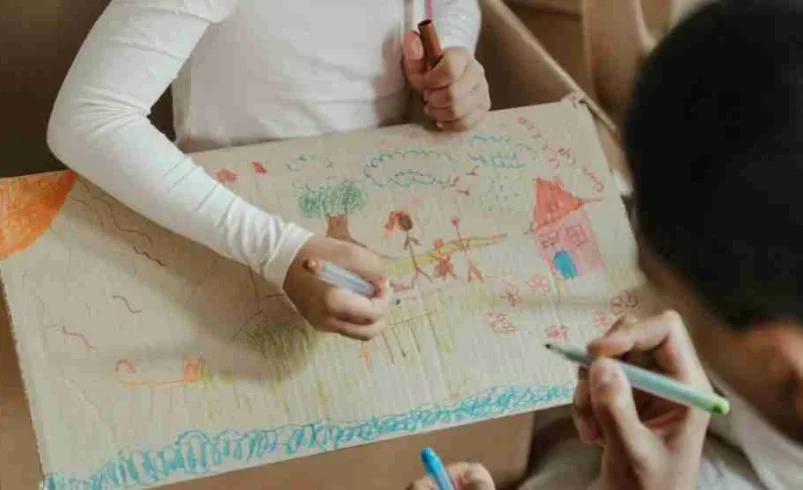
A drawing does not always stand alone. Children may be building a visual story across many pages.
The same character may visit different places, meet new creatures, solve problems, or wear different clothes. A repeated house may belong to a changing family. A series of vehicles may represent a race, journey, or rescue mission.
The child may not explain the full story unless someone asks. The pages can look disconnected when adults focus only on the repeated central image.
Keeping several drawings together can make the pattern clearer. The child may arrange them in order, create a homemade book, or describe what happened between one picture and the next.
Credit:cottonbro studio / Pexels | title: A Child’s Storytelling Through Art
Favorite subjects can reflect strong interests
Children often return to subjects they are trying to understand. A child fascinated by trains may draw tracks, engines, stations, and signals. A child interested in animals may repeat body shapes, habitats, or movement.
Drawing gives the child a way to organize information. The picture may include details noticed in books, videos, school lessons, or real-life experiences.
Strong interest does not automatically mean the child lacks variety. The repeated subject may contain growing knowledge. A simple shark drawing can gradually gain accurate fins, teeth, patterns, and ocean features as the child learns more.
Parents can support the interest by providing library books, safe observation opportunities, or new vocabulary without directing exactly what the next picture should contain.
Success makes repetition feel rewarding
Children usually return to activities that provide a sense of competence. If a child feels proud of drawing one particular character or object, repeating it can recreate that success.
This is especially meaningful when other tasks feel difficult. A child who struggles with handwriting, sports, or social situations may enjoy having one creative area that feels predictable and manageable.
The repeated drawing becomes a place where the child knows how to begin and expects a result that feels satisfying.
Parents can recognize the effort without turning the picture into a performance. A comment such as, “You made the lines more controlled this time,” is more specific than announcing that every version is the best drawing ever.
Children may repeat a drawing while processing an experience
Sometimes children return to a recent event through pictures. They may repeatedly draw a new classroom, a family trip, a hospital visit, a storm, a birthday, or an argument they witnessed.
The drawing can help the child revisit the event at a manageable pace. Each version may emphasize a different person, object, or feeling.
Adults should avoid assuming that every repeated image reveals a hidden problem. Most repetition is ordinary and enjoyable. Still, the surrounding behavior and the child’s explanation can offer context.
A neutral question such as, “You have drawn this scene several times. What part do you like thinking about?” gives the child room to share without being pressured.
The child may be studying symbols and visual shortcuts
Children gradually learn that a small set of lines can represent something much larger. Two circles and a curve can become a face. A square and triangle can become a house. A spiral may represent a shell or storm.
Repeating these symbols helps children make them faster and more recognizable. Over time, they may add details, adjust proportions, or combine familiar symbols into more complex scenes.
This is part of developing a personal visual language. The child is learning how to turn an idea into marks that another person can understand.
Do not assume repeated art means the child lacks creativity
Creativity is not limited to producing a completely new subject every time. It can also involve variation, refinement, storytelling, and finding new uses for a familiar idea.
A musician may practice the same piece repeatedly. A writer may revise one paragraph many times. A builder may redesign one structure until it works. Children often use repetition in similar ways.
The creative question is not only, “Is this subject new?” It is also, “What is the child discovering inside the subject?”
Notice the process instead of only the finished picture
Adults often respond after the drawing is complete. Watching the process can reveal more.
The child may begin with a different feature each time, erase one part repeatedly, mix colors, talk to the character, or change the story while drawing. These actions show where the child’s attention is focused.
Parents do not need to stand over the child. Occasional observation can simply help adults understand whether the activity is calming, challenging, playful, or frustrating.
Ask questions that do not turn the drawing into a test
Questions can invite conversation, but too many can make the child feel examined. “What is that?” may also be difficult when the picture is still developing or represents something imaginary.
Gentler prompts include:
“Tell me about this part.”
“What is happening in this picture?”
“Which part did you draw first?”
“What changed from the last version?”
“Does this character have a name?”
The child may answer briefly or not at all. Drawing does not always need verbal explanation to be valuable.
Offer variety through materials rather than demanding a new subject
Parents who want to broaden the activity can change the tools while allowing the subject to remain familiar.
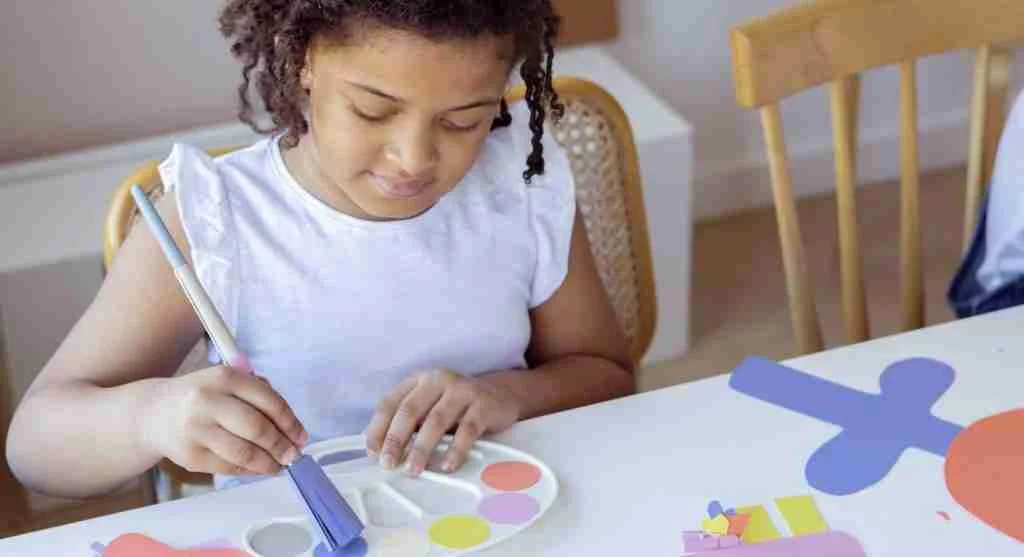
The same animal might be drawn with crayons, chalk, paint, markers, collage paper, or charcoal. The child might create it on dark paper, cardboard, a large roll of paper, or a reusable drawing board.
Different materials naturally create different decisions. Paint changes how lines and colors behave. Collage requires choosing shapes. Chalk encourages larger movement.
This introduces novelty without suggesting that the child’s favorite idea has become boring or unacceptable.
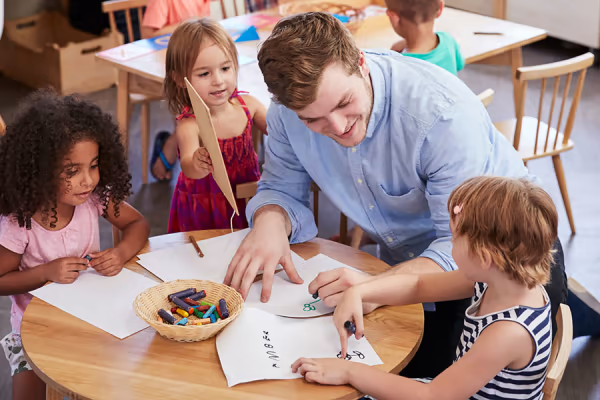
Credit:Artem Podrez / Pexels | A young child creating artwork with crayons
Invite expansion without taking control
A parent can offer an optional extension when the child appears interested. The repeated house might gain a garden, a neighbor, a storm, or a nighttime version. The familiar character might be placed in a new setting.
The invitation should remain a possibility rather than an instruction. “Would you like to draw what is behind the house?” leaves ownership with the child. “You should add a tree and a car” begins replacing the child’s choices with adult ideas.
Some children will welcome the prompt. Others will continue with the original version. Both responses are acceptable.
Save selected examples instead of every page
Repeated drawings can quickly create a large paper pile. Throwing everything away may upset the child, while keeping every page can overwhelm storage.
Families can choose a simple system. The child may select one or two favorites each week, place a group in a folder, photograph selected drawings, or create a rotating display.
Ask before discarding. The versions that look most similar to an adult may contain differences the child considers important.
A date on the back can help families notice how drawing changes across several months.
Avoid asking the child to perform the drawing on demand
When adults admire a repeated drawing, they may ask the child to produce it for relatives, teachers, or visitors. What began as private exploration can start feeling like a performance.
Some children enjoy sharing. Others become self-conscious when watched or praised heavily.
Parents can ask, “Would you like to show how you draw it?” and accept no as an answer. Creative confidence grows best when children retain some control over when and for whom they create.
What to do when the child becomes frustrated by small differences
A child may repeat a drawing because each version fails to match the picture imagined in the mind. The child may tear pages, erase holes into the paper, or restart after one uneven line.
Parents can help by separating practice from final work. Use inexpensive scrap paper for experiments. Encourage the child to circle one part that worked rather than judging the whole page.
A phrase such as, “This version is information for the next one,” can make mistakes feel useful.
A break may be needed when the child is no longer experimenting and has become increasingly distressed.
When repeated drawing may deserve closer attention
Repeating favorite subjects is common and usually reflects learning, pleasure, or strong interest. Families may want additional guidance when drawing becomes so rigid that the child cannot tolerate any change, experiences severe distress if interrupted, or is unable to participate in other expected activities.
Closer attention may also help when repeated images contain frightening material and appear alongside nightmares, sudden behavior changes, withdrawal, or ongoing fear.
A teacher, pediatric professional, school counselor, or qualified child specialist can help families consider the full pattern. A drawing alone should not be used to make a diagnosis or definite conclusion about a child’s emotional state.
How repeated drawing changes over time
Some favorite subjects disappear suddenly. Others remain for years and become more detailed as the child’s skills grow.
The child who once drew the same basic vehicle may later create road systems, mechanical parts, maps, and perspective. A repeated character may develop into comics, stories, animation, or digital art.
Parents may not be able to predict where the interest will lead. Supporting the process gives the child room to practice persistence, visual thinking, storytelling, and personal expression.
The repeated picture is not necessarily evidence that the child is stuck. It may be evidence that the child has found an idea rich enough to keep exploring.
Frequently Asked Questions
Q: Why does my child draw the same thing every day?
A: The child may be practicing physical control, exploring small changes, building a story, expressing a strong interest, or returning to an activity that feels familiar and successful.
Q: Should parents encourage children to draw different subjects?
A: Parents can offer new materials and optional prompts, but they do not need to force a new subject. Repetition can support skill development and creativity.
Q: Does repetitive drawing mean a child is not imaginative?
A: No. Children may use one familiar subject to test colors, shapes, emotions, settings, stories, and visual techniques.
Q: How should families store many similar drawings?
A: Let the child select favorites for a folder or display, photograph meaningful examples, and review the collection together before discarding pages.
Q: When should repeated drawings become a concern?
A: Additional guidance may help when the activity causes severe distress, becomes extremely rigid, prevents normal participation, or appears with major emotional or behavioral changes.
Key Takeaway
Children often repeat the same drawing because familiarity creates space for practice, experimentation, storytelling, confidence, and deeper interest. Parents can support the process by noticing small changes, asking open questions, offering varied materials, and allowing the child to keep ownership of the idea. Repetition does not automatically mean creativity has stopped. In many cases, it is how creativity and skill are quietly growing.